> For the complete documentation index, see [llms.txt](https://docs.timeinpixels.com/llms.txt). Markdown versions of documentation pages are available by appending `.md` to page URLs; this page is available as [Markdown](https://docs.timeinpixels.com/nobe-omniscope/sources/decklink-and-ultrastudio/signal-range.md).
# Signal Range
How to control the signal range
OmniScope can monitor signal in both Video (legal) and Full (data) range. To get accurate readings, the signal range settings must match between your source application and OmniScope.
In DaVinci Resolve, go to Monitoring settings where **Data levels** can be set to **Video** or **Full**. When set to Video, you can also enable **Retain sub-black and super-white data** to monitor signal outside of the legal range.
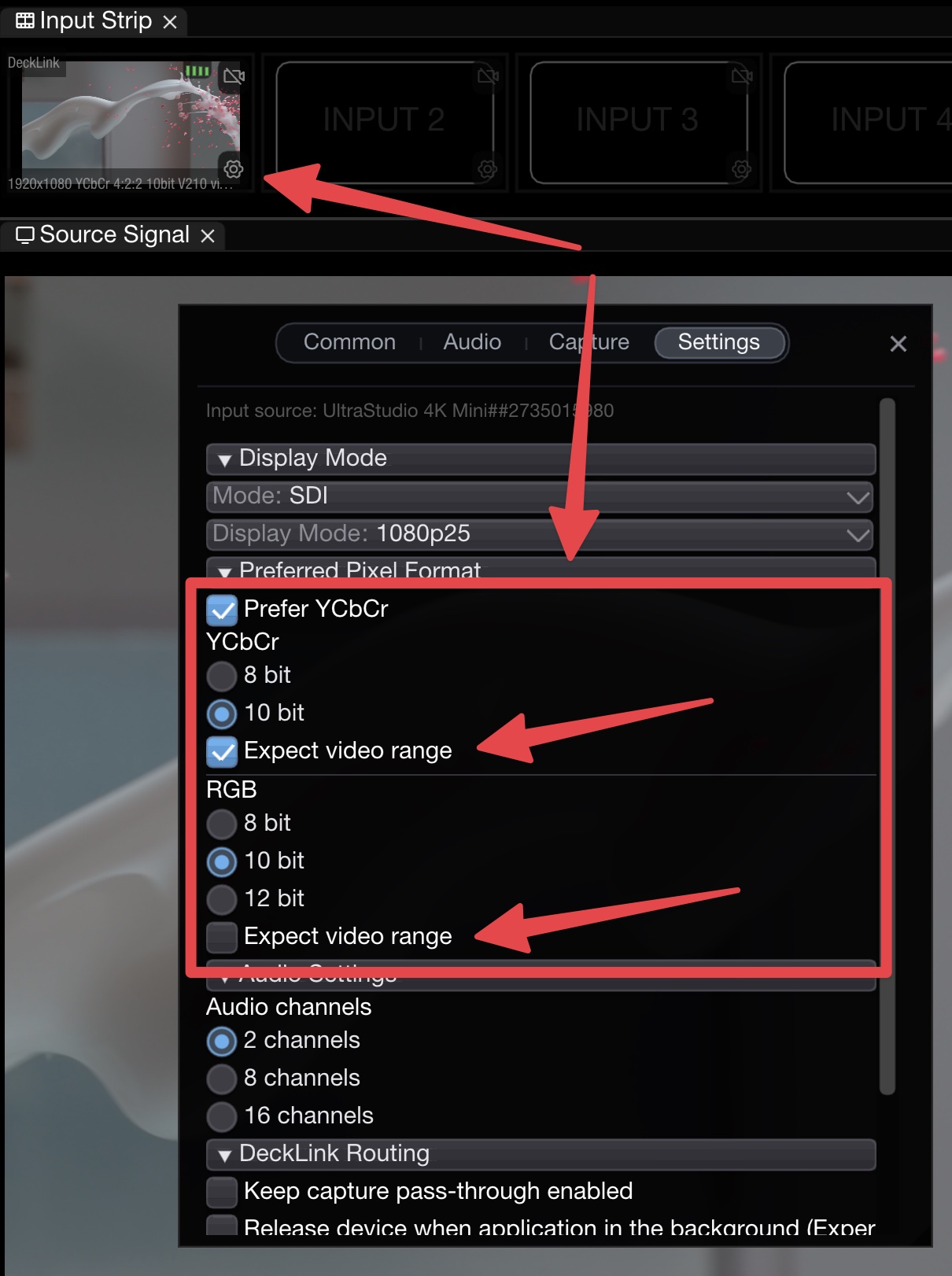
To make sure the signal is displayed correctly in OmniScope, open **Input Settings** (from the **Connect** menu or the gear icon in the toolbar, then the **Settings** tab):
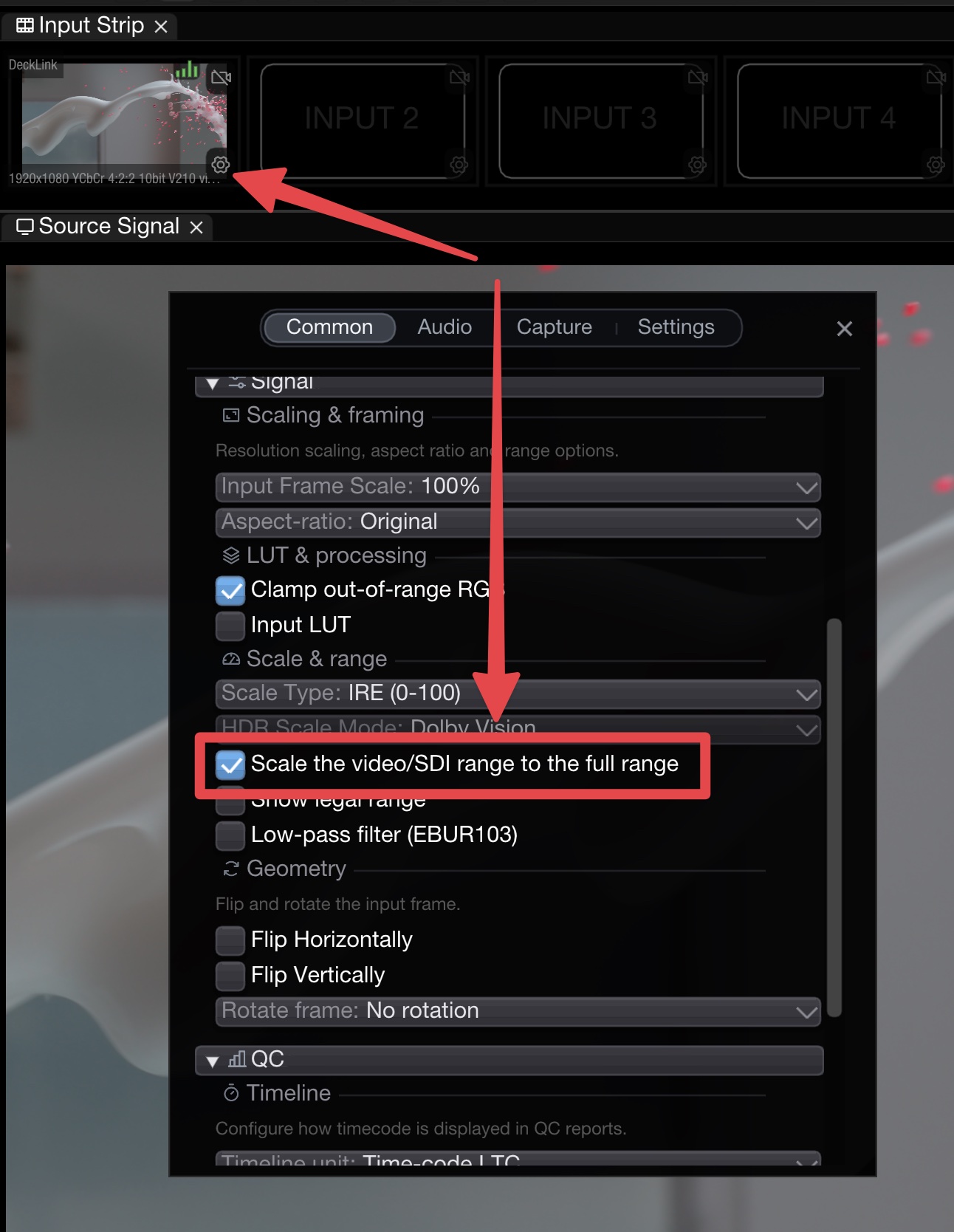
Scale signal setting in Input Settings
Signal range in Preferences
The key settings are **Expect video range** and **Scale the video/SDI range to the full range**. If **Data levels** in Resolve's Monitoring Settings is set to **Video**, then **Expect video range** should be enabled here.
OmniScope keeps the source's native range metadata separate from the internal full-range processing image. This means waveform, histogram, and numeric source readouts can follow the actual Video or Full range of the incoming signal instead of guessing from the display transform.
If you want the waveform and numeric readouts to stay in legal/video code values, also uncheck **Scale the video/SDI range to the full range** in OmniScope (**Options / Preferences / Signal**). When that scaling remains enabled, OmniScope presents the signal in full-range display space even if the source itself is tagged as video range.
To monitor out-of-gamut values (outside legal range), make sure **Retain sub-black and super-white data** is enabled in Resolve's Monitoring settings and leave **Scale the video/SDI range to the full range** disabled. Otherwise out-of-gamut values will be clipped from the displayed trace.