How to work with ACES or DaVinci Wide Gamut timeline
ACES Monitoring
OmniScope has built-in ACES support via OpenColorIO. When using an ACES color science timeline in DaVinci Resolve, OmniScope can decode the ACES colorspace directly - no CST sandwich nodes or 3D LUTs required.
Step 1: DaVinci Resolve project setup
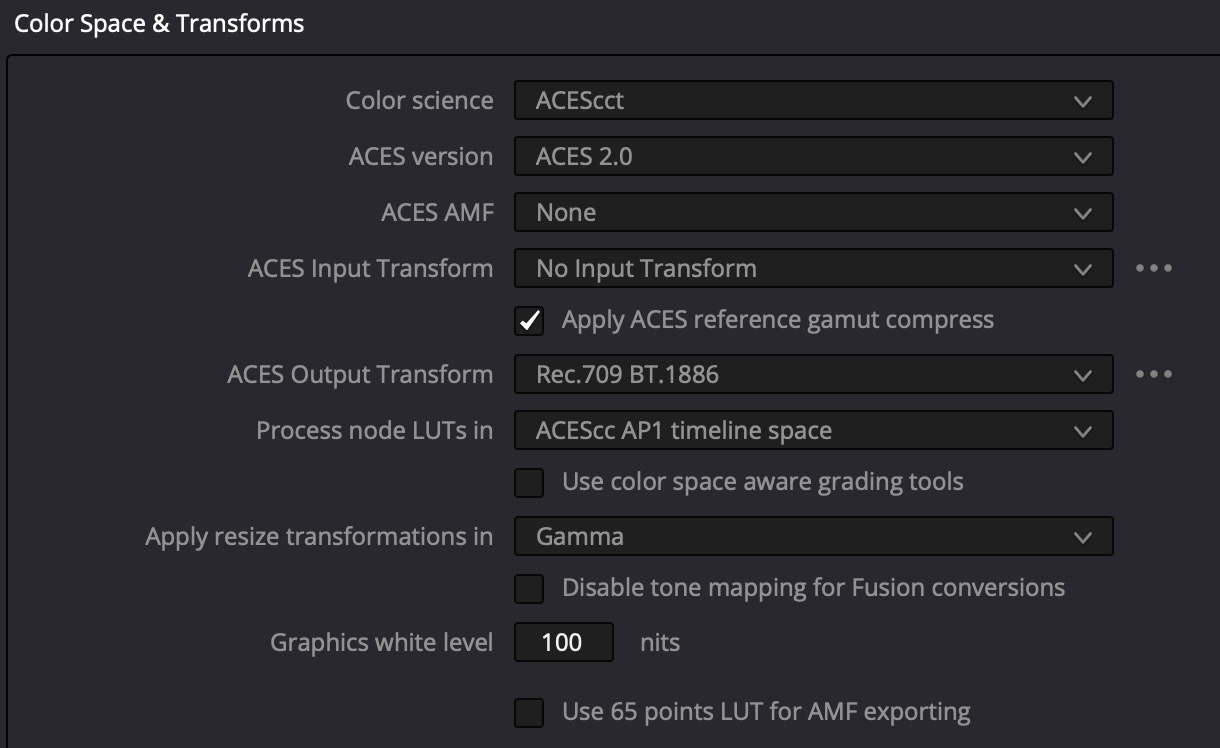
In Project Settings / Color Management, set Color science to ACEScct or ACEScc and select the desired ACES version.
DaVinci Resolve ACES project settings (ACEScct)
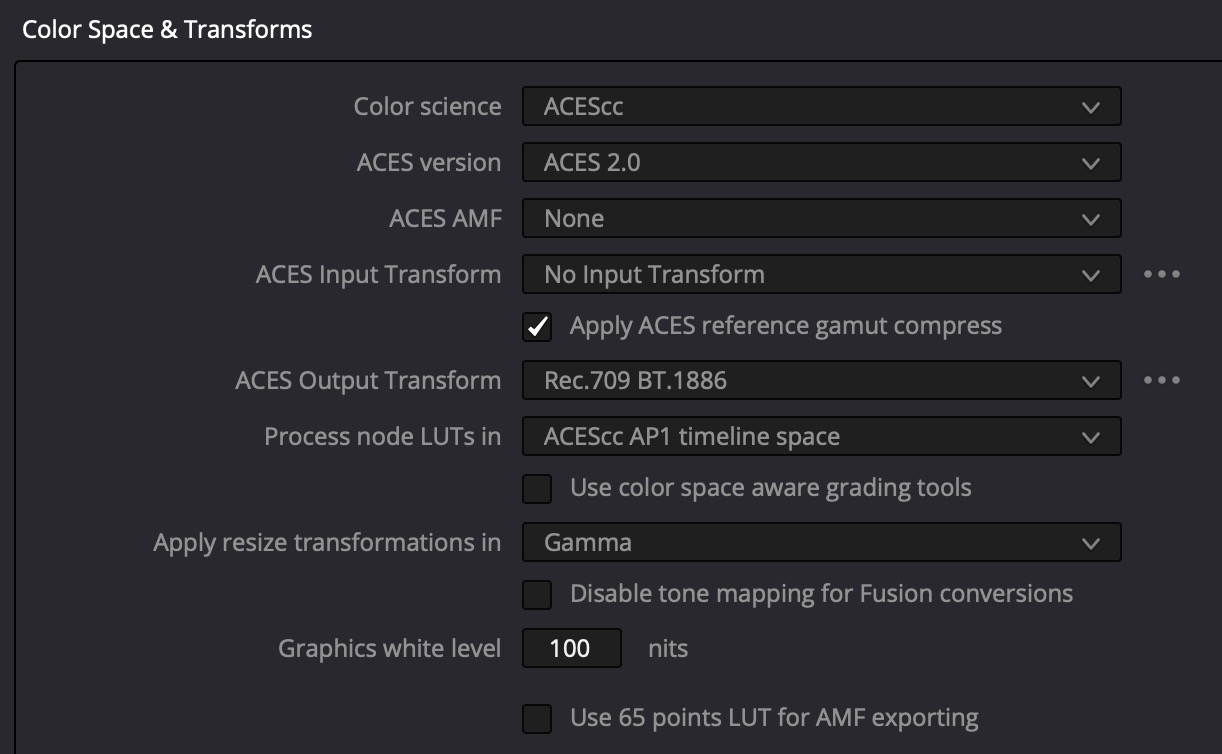
DaVinci Resolve ACES project settings (ACEScc)
Step 2: OFX plugin settings
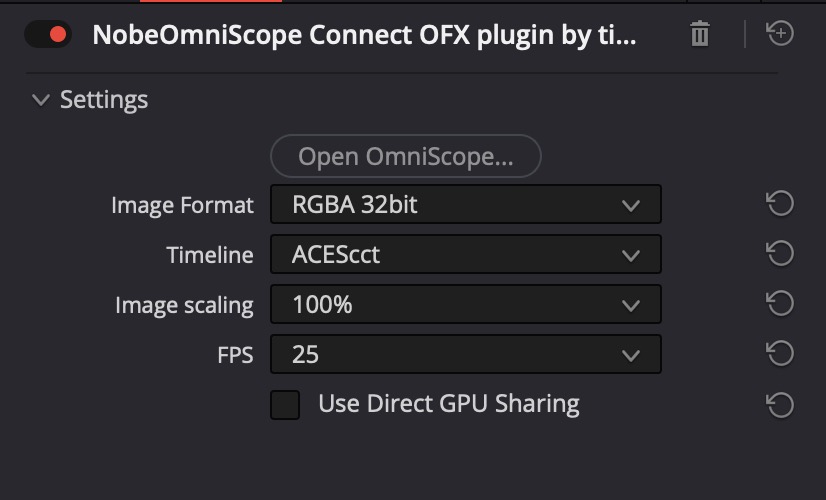
In the OmniScope Connect OFX plugin settings, set Image Format to RGBA 32bit and Timeline to match your Resolve color science (ACEScct or ACEScc).
OFX plugin settings — RGBA 32bit and ACEScct timeline
You must select RGBA 32bit Image Format when working with ACES or DaVinci Wide Gamut. The default 8-bit mode does not have enough precision for these colorspaces.
Step 3: OmniScope ACES version
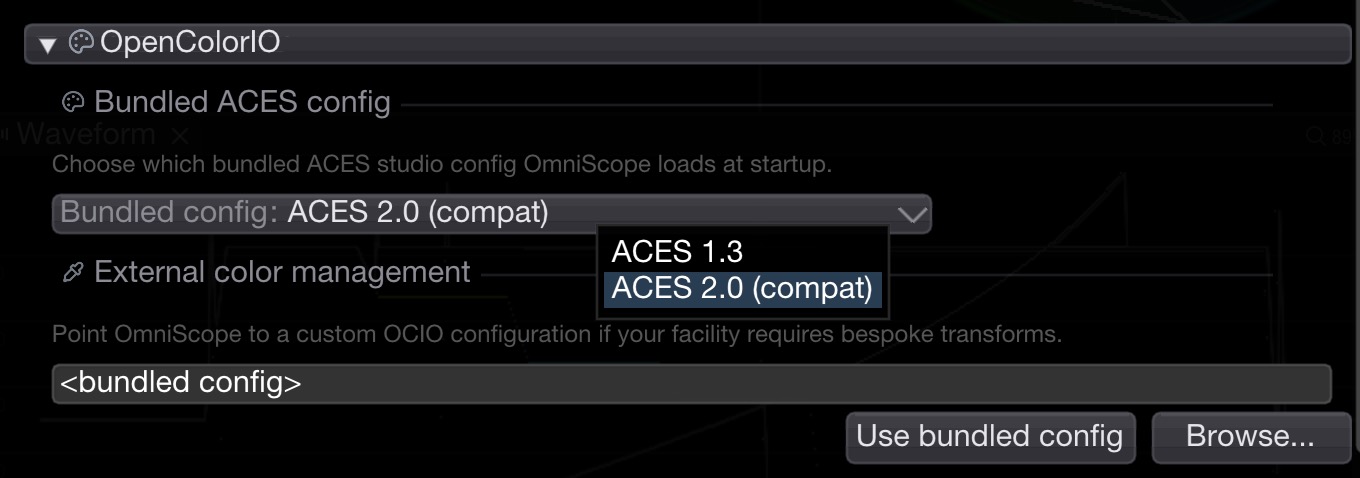
In OmniScope Preferences / OpenColorIO, select the bundled ACES config version that matches your Resolve project — ACES 1.3 or ACES 2.0 (compat).
OmniScope Preferences — Bundled ACES config version
You can also point OmniScope to a custom OCIO configuration if your facility requires bespoke transforms.
Step 4: Verify input colorspace
OmniScope automatically detects the ACES colorspace from the OFX plugin and configures the input color management accordingly. You can verify and adjust the active colorspace in the Input Settings panel — the input colorspace should show ACEScct or ACEScc matching your timeline.
OmniScope uses its bundled OCIO config to convert from the ACES working space to the display colorspace for correct monitoring on your scopes and source signal view.
DaVinci Wide Gamut
Color Space Transform nodes (CST)
When you use Nobe OmniScope with DaVinci Resolve in Color Managed timeline and DaVinci Wide Gamut the preview will appear washed out. It's because Nobe OmniScope shows you the raw image data as is in the timeline. There's no display transform applied to the image at this stage yet.
DaVinci Wide Gamut in Color Managed timeline
In order to see the correct image in Nobe OmniScope we need to use 2 built-in OFX plugins called Color Space Transform, one before Nobe OmniScope Connect plugin, and one after:
Color Space Transform "Sandwitch"
Here are the settings that we should use in the node before Nobe OmniScope Connect:
DWG to Rec.709
And these are the settings to get back to DWG:
Rec.709 to DWG
DWG to Rec.709 3D LUT
If you prefer not to use the CST node in Resolve to go back and forth between DWG and Rec.709 there's another way. You can use a 3D LUT to go from DaVinci Wide Gamut to Rec.709 directly in OmniScope.