> For the complete documentation index, see [llms.txt](https://docs.timeinpixels.com/llms.txt). Markdown versions of documentation pages are available by appending `.md` to page URLs; this page is available as [Markdown](https://docs.timeinpixels.com/nobe-omniscope/sources/davinci-resolve-ofx.md).
# DaVinci Resolve OFX
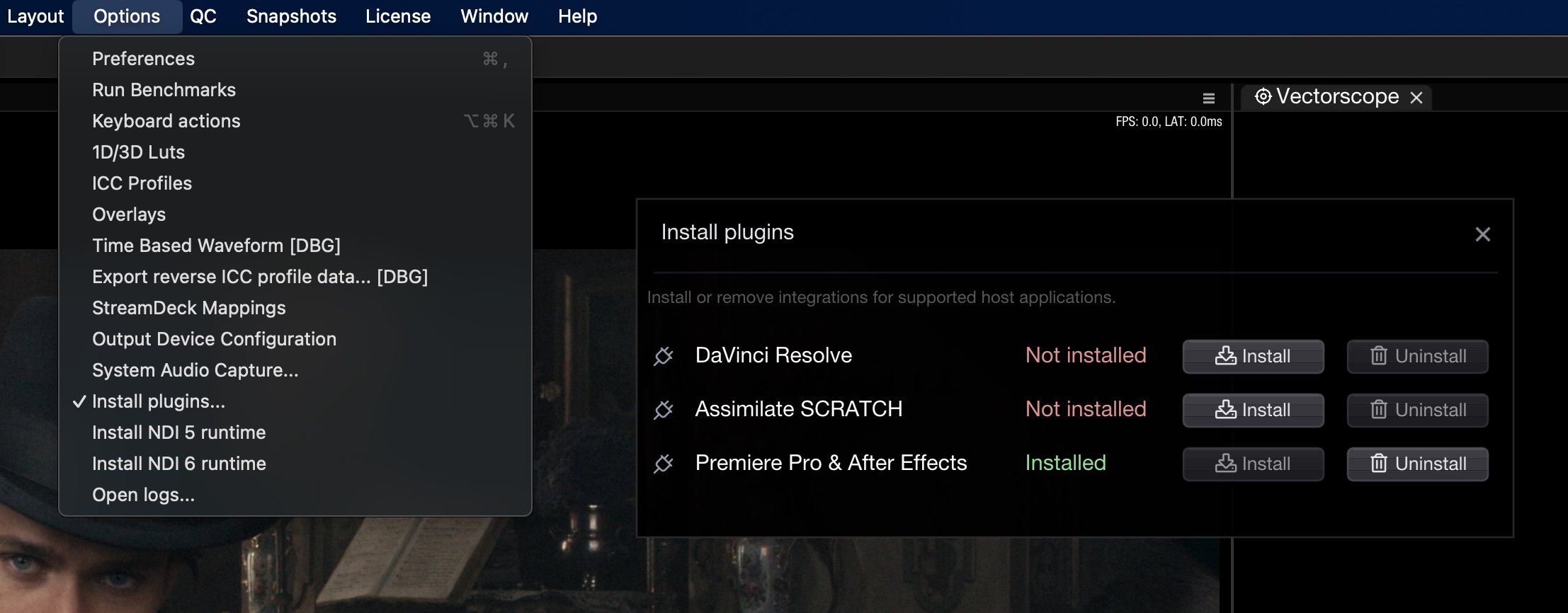
The OFX plugin is installed automatically on Windows. On macOS, select **Options / Install plugins…**
Install individual plugins
{% hint style="info" %}
If Resolve is open please restart it to reload the OFX plugin.
{% endhint %}
## Using OpenFX plugin in DaVinci Resolve
### Adjustment Layer
To easily monitor all the clips in the timeline create an adjustment layer above your clips in the timeline in the **Edit Page**, and place the OpenFX plugin on top of that layer.
Find **Effects** in the **Toolbox** in your **Edit Page** on the left side of your timeline:

And then drag the **OmniScope Connect** plugin on top of that **Adjustment Clip**:

## Timeline node
Alternatively, you can use **Timeline Node** in the **Color Page**:

{% hint style="info" %}
Placing an OpenFX plugin in the Timeline node can cause side effects when Caching is enabled in Resolve - the plugin can start sending frames to OmniScope once background renderer is started even if the clip is paused.\
\
To fix that please use the **Adjustment Layer** approach above.
{% endhint %}